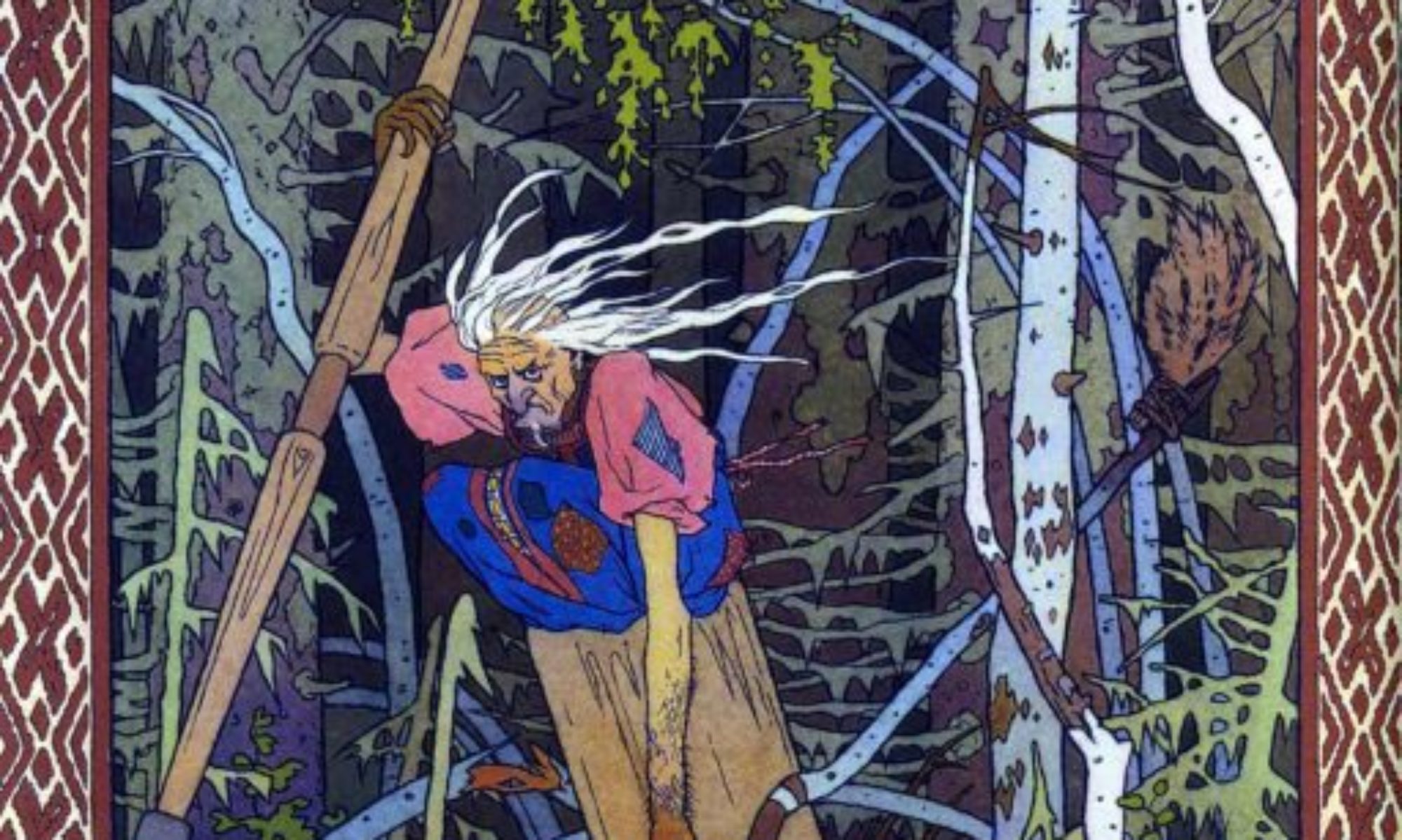
This tale supports the fact that Baba Yaga does not ask male heroes to complete difficult tasks. Baba Yaga shows up at their house, and essentially steals their food. It can be concluded that Baba Yaga is testing their masculinity. Similar to Little Phillip showing his maturity through being unable to be forced into the oven, Little Bear is showing that he is developing into a masculine young man. By defeating Baba Yaga, he is essentially shedding the skin of the little boy who did not fit in with his clan and growing into a mature adult. 
“The Swan Geese”

In this tale, it is important to note that the swan-geese are helpers to Baba Yaga. In a sense, they embody the same spirit as the old witch. The heroine is given tasks to complete at the beginning of the tale. However, because she neglects to complete them, her life and her little brother’s life is put at risk in the presence of Baba Yaga. In female tales, Baba Yaga appears as a villain and the tasks she presents to the heroine will result in life or death for the child. She, again, is testing the girl in this story through the tasks. In the end, the heroine is victorious and completes the tasks to hide from Baba Yaga and save her little brother.
“Little Phillip”
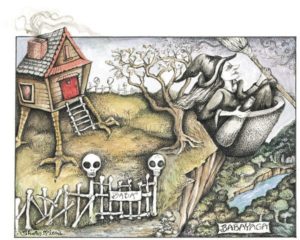
In this tale, Baba Yaga is portrayed as an evil, cannibalistic villain. It is important to note that while she does play a villain, she does not provide tasks for the young hero. Instead, she simply tells her daughter to “heat the stove and to roast Little Phillip” (Johns, 47). Baba Yaga shows no mercy for male heroes. Johns suggests that the act of showing no mercy and wanting to force the boy into the oven is symbolic of a mother wanting to her child back in her womb. “Perhaps the range in the hero’s age reflects a cultural anxiety about male children and their ability to form a masculine identity, not only as infants and small children, but even into puberty,” Johns states. In the traditional Slavic culture, mothers feared their sons would not achieve the level of masculinity that was expected of them. Baba Yaga’s failure of forcing Little Phillip back into the oven may mean that Little Phillip is maturing and developing into a young man who can save himself from these sorts of dangerous situations, and his mother does not need to watch him with such a close eye.
“Vassalissa the Beautiful”

In this story, it is obvious that the heroine is a young girl and Baba Yaga is the villain. Baba Yaga provides a set of tasks for Vassalissa to complete. Scholar Andreas Johns states that this Baba Yaga taking on the role of a “hostile tester”, a subtype of a villain (Johns, 117). Baba Yaga is perhaps testing the heroine’s characteristics that will aid her in maturing into a young woman, such as diligence and compliance (Johns,120). These tasks provided by the villain, Baba Yaga, are preparing young Vassalissa for womanhood and a marriage where her role is the keeper of the house. At the end of the tale, Vassalissa marries the Tsar of the kingdom. This can be seem as her prize of completing the tasks successfully and therefore allows her to move onto the next phase of her life; marriage.